即刻App年轻人的同好社区
下载
看到一句话:幸福是什么?拥有苹果的时候只想着苹果。这真是绝妙的一句话。
想获得幸福,首先你得拥有苹果,拥有苹果这种看得见摸得着的东西,还是可以实现的,拥有那些虚头巴脑的就不一定,尤其是那些即便短暂相逢也必然不能持续拥有的东西,比如他人的认可,比如权力的游戏。
拥有苹果的时候想着桃子,也没法获得幸福,你看着苹果说为什么我还没有桃子我好痛苦,生活提醒你可是你已经有苹果了知足吧你,你说我就要桃子就要,那也许一开始你就应该先去追求桃子,可如果你求桃得桃,又得桃望梨,那就请接受注定被剥离幸福感的诅咒。
这就说到了最重要的一个话题,幸福不是所有人的追求。有人追求权力,追求财富,追求自我实现,后来发现自己追求的是幸福。而有的人出发的那一刻也没意识到自己原来这么能忍,可以为了一些别的东西,忍受巨大的痛苦,献祭自己的幸福。
我们生活中看似与很多人有各种交集,可是每个人的轨迹从来都是平行的,你不知道ta的苹果是什么,你都不知道ta要不要那个苹果,不过你能看出来ta是不是在有了苹果的时候还渴望桃子,你也能看出来ta是不是在渴望桃子的时候忘记了自己当初的选择。
想获得幸福,首先你得拥有苹果,拥有苹果这种看得见摸得着的东西,还是可以实现的,拥有那些虚头巴脑的就不一定,尤其是那些即便短暂相逢也必然不能持续拥有的东西,比如他人的认可,比如权力的游戏。
拥有苹果的时候想着桃子,也没法获得幸福,你看着苹果说为什么我还没有桃子我好痛苦,生活提醒你可是你已经有苹果了知足吧你,你说我就要桃子就要,那也许一开始你就应该先去追求桃子,可如果你求桃得桃,又得桃望梨,那就请接受注定被剥离幸福感的诅咒。
这就说到了最重要的一个话题,幸福不是所有人的追求。有人追求权力,追求财富,追求自我实现,后来发现自己追求的是幸福。而有的人出发的那一刻也没意识到自己原来这么能忍,可以为了一些别的东西,忍受巨大的痛苦,献祭自己的幸福。
我们生活中看似与很多人有各种交集,可是每个人的轨迹从来都是平行的,你不知道ta的苹果是什么,你都不知道ta要不要那个苹果,不过你能看出来ta是不是在有了苹果的时候还渴望桃子,你也能看出来ta是不是在渴望桃子的时候忘记了自己当初的选择。
7 20


b站有专业音频up主测评过4款头戴式耳机,爱马仕、celine、德国极致(也是爱马仕耳机的代工厂)、苹果,最终结论是苹果是性价比之选lol 评论区也有网友推荐的其他头戴式耳机可以看看👀 视频链接在这里🔗 【全球首测11万爱马仕耳机!听过的人都沉默了..-哔哩哔哩】 b23.tv

西元Levy: 万即,头戴式耳机推荐什么款?
2 00
昨天和非AI从业者朋友吃饭交流,了解了一些普通大众对AI的看法。我认为对于这些朋友,最重要的问题,不应该是把时间花在费力地研究如何安装小龙虾🦞上,而应该是先研究如何稳定地翻墙🪜、如何使用上gemini/chatgpt/claude。
17 32
很浪漫了 说话间突然天空中一声巨响 吓得一躬身子 然后就看到了漫天烟花 瞬间也不记得在聊啥了 就在那静静地看烟花🎆

生姜iris: 补发一个和@喝鹅何说说 在三亚沙滩上遛弯的时候看到的巨好看的沙滩烟花🎆 海边尊嘟好适合放烟花!
7 00
分享一下刚做的测试,谷歌新出的deepthink模型确实可以参数化建模了,可以解决ai生成模型无法精准控制尺寸的问题。视频里我用两段提示词,分别制作了一个固定尺寸的手机壳,还有一个可以自己调节参数的手机壳建模工具,甚至ai还主动想到了要设置一个公差的参数,建议tpu材质预留0.2-0.25mm公差,硬质材料预留至少0.4mm公差。
亲测有效!谷歌deepthink确实能参数化建模 - 小红书
6 00
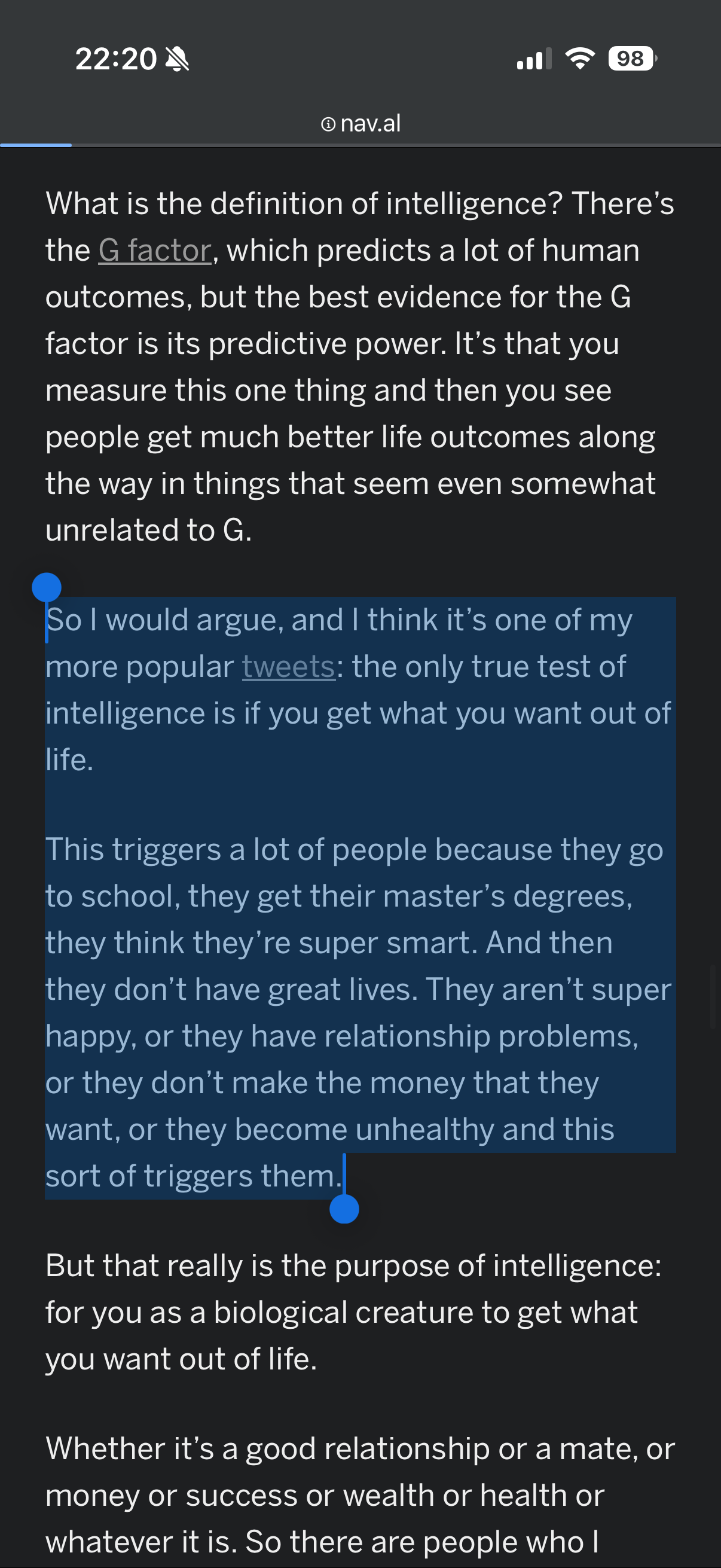
纳瓦尔2.19的播客,这一段关于intelligence的定义和意义的探讨,说得太好了,我觉得要看原文,我把原文分享过来:
What is the definition of intelligence? There’s the G factor, which predicts a lot of human outcomes, but the best evidence for the G factor is its predictive power. It’s that you measure this one thing and then you see people get much better life outcomes along the way in things that seem even somewhat unrelated to G.
So I would argue, and I think it’s one of my more popular tweets: the only true test of intelligence is if you get what you want out of life.
This triggers a lot of people because they go to school, they get their master’s degrees, they think they’re super smart. And then they don’t have great lives. They aren’t super happy, or they have relationship problems, or they don’t make the money that they want, or they become unhealthy and this sort of triggers them.
But that really is the purpose of intelligence: for you as a biological creature to get what you want out of life.
Whether it’s a good relationship or a mate, or money or success or wealth or health or whatever it is. So there are people who I think are quite intelligent because you can tell they have high-quality, functioning lives and minds and bodies, and they’ve just managed to navigate themselves into that situation.
It doesn’t matter what your starting point is, because the world is so large now, and you can navigate it in so many different ways that every little choice you make compounds and demonstrates your ability to understand how the world works until you finally get to the place that you want.
Now the interesting thing about this definition—that the only true test of intelligence is if you get what you want out of life—is that an AI fails it instantly, because an AI doesn’t want anything out of life.
The AI doesn’t even have a life—let alone that—but it doesn’t want anything. AI’s desires are programmed by the human controlling it.
But let’s give it that for a second. Let’s say the human wants something and programs the AI to go get it; then the AI is acting as a proxy for the human and the intelligence of the AI can be measured as: did it get that person that thing?
Most of the things that we want in life are adversarial or zero-sum games.
So, for example, if you want to seduce a girl or get a husband, you’re competing with all the other people who are out there seducing girls or trying to get husbands. So now you’re in a competitive situation. The AI has to outmaneuver the other people.
Or if you say, “Hey, AI, go trade on the stock market for me and make me a bunch of money.” That AI is trading against other humans and other trading bots. It’s an adversarial situation. It has to outmaneuver them.
Or if you say, “Hey, AI, make me famous. Write me incredible tweets. Write me great blog posts. Record me great podcasts in my own voice and make me famous,” now it’s competing against all the other AIs.
So in that sense, intelligence is measured in a battlefield—in an arena. It’s a relative construct. I think the AIs are actually going to fail mostly in those regards, or to the extent that they even succeed, because they’re freely available, they will get outcompeted away, and the alpha that will remain would be entirely human.
What is the definition of intelligence? There’s the G factor, which predicts a lot of human outcomes, but the best evidence for the G factor is its predictive power. It’s that you measure this one thing and then you see people get much better life outcomes along the way in things that seem even somewhat unrelated to G.
So I would argue, and I think it’s one of my more popular tweets: the only true test of intelligence is if you get what you want out of life.
This triggers a lot of people because they go to school, they get their master’s degrees, they think they’re super smart. And then they don’t have great lives. They aren’t super happy, or they have relationship problems, or they don’t make the money that they want, or they become unhealthy and this sort of triggers them.
But that really is the purpose of intelligence: for you as a biological creature to get what you want out of life.
Whether it’s a good relationship or a mate, or money or success or wealth or health or whatever it is. So there are people who I think are quite intelligent because you can tell they have high-quality, functioning lives and minds and bodies, and they’ve just managed to navigate themselves into that situation.
It doesn’t matter what your starting point is, because the world is so large now, and you can navigate it in so many different ways that every little choice you make compounds and demonstrates your ability to understand how the world works until you finally get to the place that you want.
Now the interesting thing about this definition—that the only true test of intelligence is if you get what you want out of life—is that an AI fails it instantly, because an AI doesn’t want anything out of life.
The AI doesn’t even have a life—let alone that—but it doesn’t want anything. AI’s desires are programmed by the human controlling it.
But let’s give it that for a second. Let’s say the human wants something and programs the AI to go get it; then the AI is acting as a proxy for the human and the intelligence of the AI can be measured as: did it get that person that thing?
Most of the things that we want in life are adversarial or zero-sum games.
So, for example, if you want to seduce a girl or get a husband, you’re competing with all the other people who are out there seducing girls or trying to get husbands. So now you’re in a competitive situation. The AI has to outmaneuver the other people.
Or if you say, “Hey, AI, go trade on the stock market for me and make me a bunch of money.” That AI is trading against other humans and other trading bots. It’s an adversarial situation. It has to outmaneuver them.
Or if you say, “Hey, AI, make me famous. Write me incredible tweets. Write me great blog posts. Record me great podcasts in my own voice and make me famous,” now it’s competing against all the other AIs.
So in that sense, intelligence is measured in a battlefield—in an arena. It’s a relative construct. I think the AIs are actually going to fail mostly in those regards, or to the extent that they even succeed, because they’re freely available, they will get outcompeted away, and the alpha that will remain would be entirely human.
11 02
其实艺术史上的各种“主义”,本质上都是新一代人对旧审美的反叛。
比如我们今天日常生活中习惯的现代主义极简风审美,其实就是工业革命后对19世纪那些过度装饰风格的反叛。以前贵族们觉得越复杂越高级,一个花纹可能就得磨半年,但工厂生产效率极大提升之后,手工业炫技的稀缺感就没了。于是强调功能、逻辑和效率的工业美学就成了主流,一直影响到今天。
我觉得ai已经在重塑今天的审美了,但目前还只停留在工具层面。我想只有更多严肃创作者真正介入,开始系统性地实验和反思时,属于这个时代的新审美主义才会真的出现吧。
比如我们今天日常生活中习惯的现代主义极简风审美,其实就是工业革命后对19世纪那些过度装饰风格的反叛。以前贵族们觉得越复杂越高级,一个花纹可能就得磨半年,但工厂生产效率极大提升之后,手工业炫技的稀缺感就没了。于是强调功能、逻辑和效率的工业美学就成了主流,一直影响到今天。
我觉得ai已经在重塑今天的审美了,但目前还只停留在工具层面。我想只有更多严肃创作者真正介入,开始系统性地实验和反思时,属于这个时代的新审美主义才会真的出现吧。

allenwang: 在车上问四岁的孩子,这张广告图里的动物有没有问题?她说,没有。 也许 AIGC 的审美,真的会慢慢成为下一代 AI Native 的世界。这究竟是进化,还是某种退化?会不会有一天,我们不再谈“工匠精神”,也不再谈所谓的审美与品味,我是真的母鸡了🫠
2 01