即刻App年轻人的同好社区
下载
📖 推荐1本中高级英文书 雅思6.5-7分
>>> Simon英文书推荐06
今年读到的第一本,
我认为有必要读10遍的书!
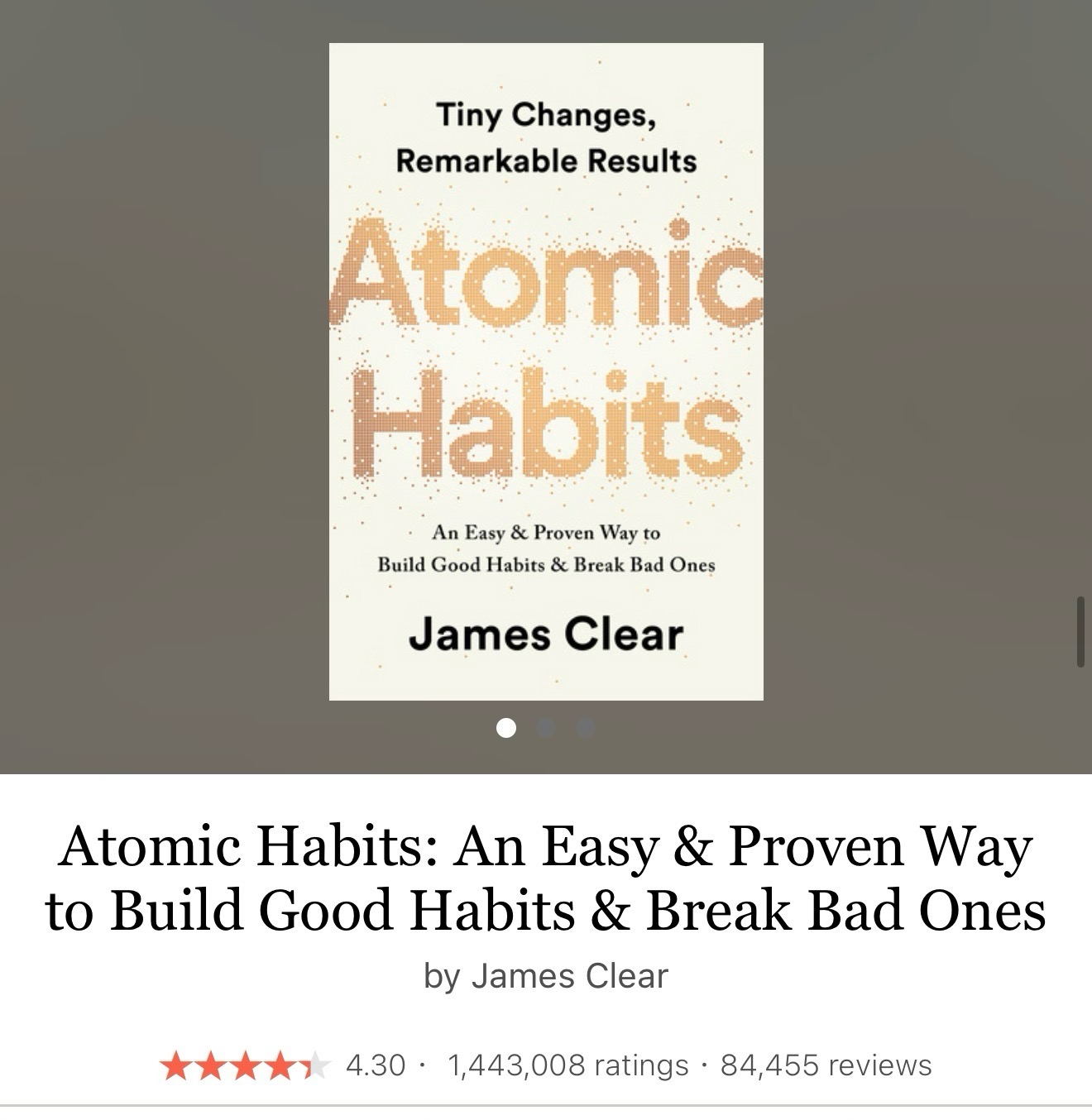
在Goodreads平台上,
有144万多人打出了4.3的高分!(图2)
今年1月读了1遍电子版,10月又在网上买了纸质版,花了大概半个月又看一遍。看完这本书,我有一个夸张的想法——从简单处做起,长期持续做下去,由易到难、循序渐进,我们几乎能做成任何事!
本书英文名The Atomic Habits,中文名《原子习惯》,总体就讲一件事「如何培养好习惯」。整本书结构非常清晰,作者把「人行为的发生」分成了四阶段:Cue - Craving - Response - Reward. 第一章讲习惯的基本原理,接下来的四章分别详细阐述了每个行为阶段都发生了什么,同时讲解相对应的培养习惯的方法。第五章则补充讲解了一些习惯培养的中高阶原理。
整体上来说,这本书表达的核心观点是:
「培养好习惯,最重要的不是多强的意志力甚至不需要多少意志力,而是要学会建立一套系统的行动方法——对行为的每个阶段进行设计使其更具吸引力,从而由易到难、循序渐进地养成某个终身习惯。」
在这里我不做过多「剧透」。感兴趣的朋友可以自己去读,这本书即便读不了英文版,也建议你在「微信读书」上读中文版。而从英文学习上讲,这本书稍有难度,适合从中级到高级过渡的朋友。
- - - - - - - - - - -
✅ The Atomic Habits 英文书介绍
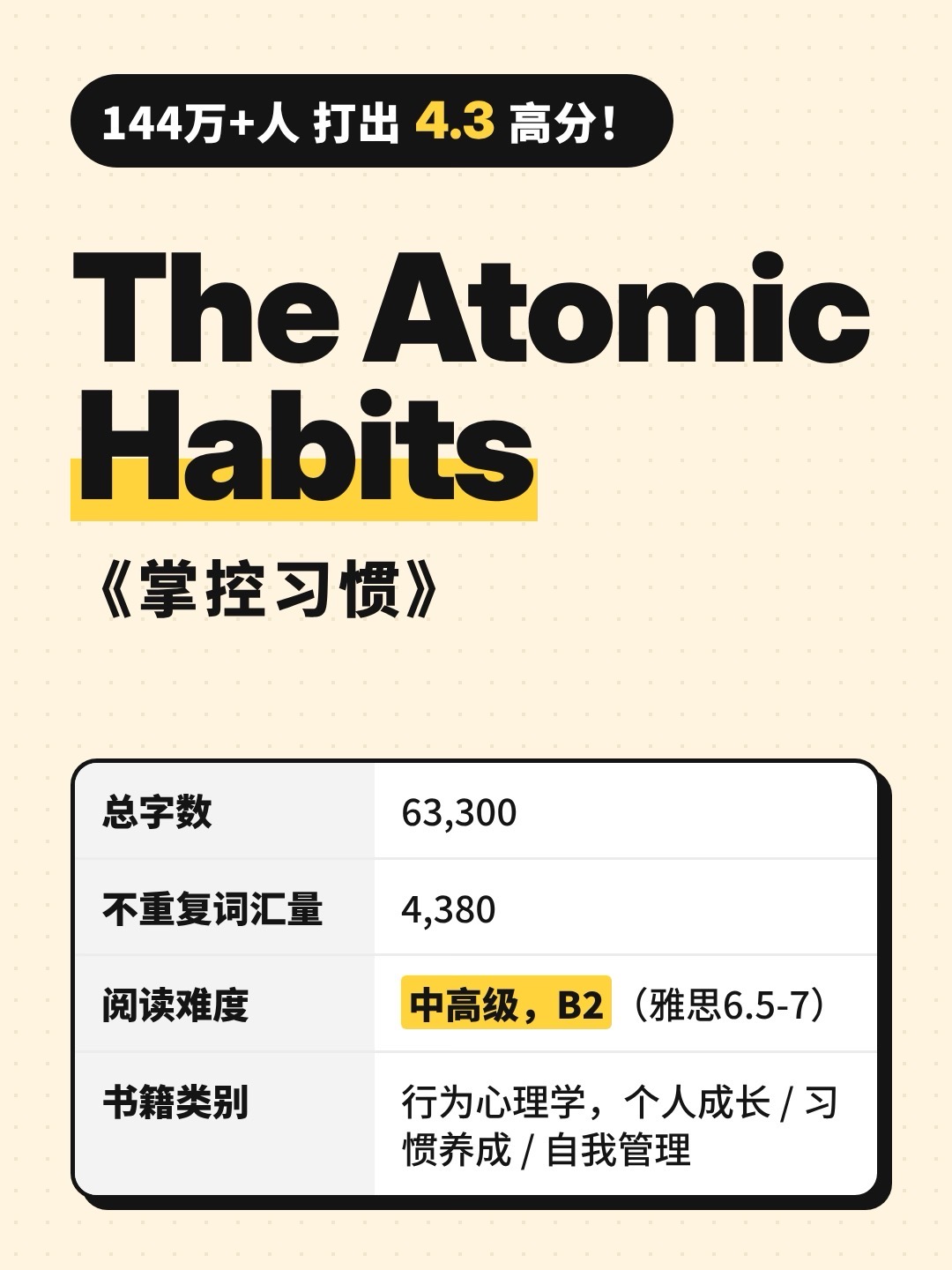
▶ 总字数:63,300
▶ 不重复词汇量:4,380
▶ 阅读难度:中高级,B2(雅思6.5-7)
▶ 书籍类别:行为心理学,个人成长 / 习惯养成 / 自我管理
▶ 可能感兴趣的人:
想培养阅读、健身、学习、储蓄等长期习惯的人;
经常制定目标,却很难长期坚持的人;
对自律、效率提升、行为改变和个人成长感兴趣的人;
希望理解“环境、身份和行为之间如何相互影响”的读者;
✅ 内容简介
《Atomic Habits》讨论的不是如何靠意志力突然改变人生,而是如何通过微小、可持续的行为改变长期结果。James Clear从“每天进步1%”讲起,指出习惯会像复利一样不断累积,而真正决定结果的并非一次性的目标,而是每天重复的系统。
整本书其实就讲这一件事:如何培养好习惯。作者认为,培养好习惯,最重要的不是意志力,而是建立一套有效的行动系统,让好习惯更容易执行。
书中将习惯的形成分为四个阶段:
📌 Cue(提示)
📌 Craving(渴望)
📌 Response(反应)
📌 Reward(奖励)
围绕这四个阶段,作者提出了四条培养好习惯的法则:让它显而易见、有吸引力、容易执行、令人满足。这本书最让我喜欢的地方,是它不仅把习惯形成的原理讲得非常清楚,还提供了许多具体、可操作的方法。全书结构清晰,逻辑严密。读完之后,真的会让人产生立即行动的冲动。
❤️ 金句摘录
1. Habits are the compound interest of self-improvement. The same way that money multiplies through compound interest, the effects of your habits multiply as you repeat them. They seem to make little difference on any given day and yet the impact they deliver over the months and years can be enormous. It is only when looking back two, five, or perhaps ten years later that the value of good habits and the cost of bad ones becomes strikingly apparent.
这是全书最核心的观点之一:习惯真正的力量不在于某一天产生了多大改变,而在于微小行为经过几年重复之后产生的复利效应。
2. You do not rise to the level of your goals. You fall to the level of your systems. Focusing on the overall system, rather than a single goal, is one of the core themes of this book. By now, you’ve probably realized that an atomic habit refers to a tiny change, a marginal gain, a 1 percent improvement. But atomic habits are not just any old habits, however small. They are little habits that are part of a larger system.
很多人把失败归因于“目标不够明确”或“意志力不够”,但作者认为真正决定结果的是你每天运行的系统——目标告诉你去哪里,系统决定你最终能不能到达。
3. Every action you take is a vote for the type of person you wish to become. No single instance will transform your beliefs, but as the votes build up, so does the evidence of your new identity. This is one reason why meaningful change does not require radical change. Small habits can make a meaningful difference by providing evidence of a new identity. And if a change is meaningful, it actually is big. That’s the paradox of making small improvements.
这段解释了“身份型习惯”:每次阅读、健身、写作都不只是完成一件事,而是在告诉自己“我是一个怎样的人”,长期改变往往就是这样一点点建立起来的。
4. Environment is the invisible hand that shapes human behavior. Despite our unique personalities, certain behaviors tend to arise again and again under certain environmental conditions. In church, people tend to talk in whispers. On a dark street, people act wary and guarded. In this way, the most common form of change is not internal, but external: we are changed by the world around us. Every habit is context dependent.
作者把很多所谓“缺乏自制力”的问题重新解释成环境问题:与其每天逼自己抵抗诱惑,不如首先改变那些不断诱发坏习惯的环境。
5. Whenever you want to change your behavior, you can simply ask yourself:
> How can I make it obvious?
> How can I make it attractive?
> How can I make it easy?
> How can I make it satisfying?
The key to creating good habits and breaking bad ones is to understand these fundamental laws and how to alter them to your specifications. Every goal is doomed to fail if it goes against the grain of human nature.
这四个问题构成了整本书最重要的实践框架:不要只要求自己“坚持”,而是通过重新设计提示、吸引力、执行难度和反馈,让好习惯变得越来越自然。
- - - - - - - - - -
📮往期推荐📮
> 推荐1本中级英文书1 m.okjike.com
> 推荐1本中级英文书2 m.okjike.com
> 推荐3本入门级英文书 m.okjike.com
3 00
来自圈子

一起学英语
180743人已经加入