即刻App年轻人的同好社区
下载
想说的很多,但能说的却不多。如今正在发生的是ongoing paradigm shift的一部分,类似的情况在相似的历史时期一再发生。另一方面,对于特定国家而言,存在这样的可能,即从中期到长期的timeframe而言,目前的情况并不是终局性的,局势可能进一步升级 (further decoupling in different ways might be inevitable). We will see.
15 50



For macro investors (and probably all investors), it could be highly relevant to gauge big swings in policy. There are different ways to do that (personally I'd like to look into macro environment to gauge to which extent policy makers are boxed in, and to look into history to understand the potential mindset with which policy makers might perceive certain issues). However, when it comes to the swing of China's policies, a pattern seems to reoccur for several times in the past few years, which I would like to sum up as follows:
1. The macro environment urgently demands the change of policy (e.g. policies pertaining to COVID, or to a lesser extent, policies related to the real estate industry);
2. For an extended period of time, the original policy sustains; as a result, both the market and the economy responds negatively, and on some occasions maybe extremely negatively;
3. While no official change of policy is announced, certain non-official individuals start to spread 'rumours' concerning the change of policy. These rumours often align with the market's desires, but no official confirmation follows immediately.;
4. Interestingly, those individuals spreading the "rumours" are not punished or banned as they might be in many other similar instances;
5. After a period of time, policies change in line with the anticipated adjustments.
Why does this happen? It's likely a 'test of waters' before making a major policy shift. As the old Chinese saying goes, "The wind starts from the tiniest ripple (风起于青萍之末)." For one familiar with Chinese history, probably we could agree that such practice dates back much earlier than contemporary.
I see the pattern emerge again in relation to China's potential QE, a helpful and probably necessary measure to alliviate pains and hopefully to potentially resolve the problem. True, not true? I am not sure, but I think it is worthy of further attention, because if it is true, it would be a big thing. A potential QE, particularly if of an appropriate size, could be highly stimulative to the financial market (while one that is too small would be less stimulative). Let's wait and see.
1. The macro environment urgently demands the change of policy (e.g. policies pertaining to COVID, or to a lesser extent, policies related to the real estate industry);
2. For an extended period of time, the original policy sustains; as a result, both the market and the economy responds negatively, and on some occasions maybe extremely negatively;
3. While no official change of policy is announced, certain non-official individuals start to spread 'rumours' concerning the change of policy. These rumours often align with the market's desires, but no official confirmation follows immediately.;
4. Interestingly, those individuals spreading the "rumours" are not punished or banned as they might be in many other similar instances;
5. After a period of time, policies change in line with the anticipated adjustments.
Why does this happen? It's likely a 'test of waters' before making a major policy shift. As the old Chinese saying goes, "The wind starts from the tiniest ripple (风起于青萍之末)." For one familiar with Chinese history, probably we could agree that such practice dates back much earlier than contemporary.
I see the pattern emerge again in relation to China's potential QE, a helpful and probably necessary measure to alliviate pains and hopefully to potentially resolve the problem. True, not true? I am not sure, but I think it is worthy of further attention, because if it is true, it would be a big thing. A potential QE, particularly if of an appropriate size, could be highly stimulative to the financial market (while one that is too small would be less stimulative). Let's wait and see.
11 12
Just to follow up: Bloomberg报道了policy makers可能在考虑a big rescue package to stimulate the stock market. 如果这篇报道属实的话,救市计划的规模可能较大,且部分措施本周内就会宣布。True, not true? I will leave it for your judgement. 但如果这条消息属实的话,我的猜测是短期内会对市场有一定的提振作用。We will see.
11 21
Deleveraging就是索罗斯所说的「繁荣与崩解」中所指的崩解,如果不能进行正确的管理,it is going to be increasingly painful. 理解deleveraging的mechanics并进行良好的管理是policy makers在整个长期债务循环中最重要的任务之一,and I hope, or at least I wish, that all policy makers in that position could do well.
21 13
Interest rate at the center of the market trend
这篇文章较长,我将主要的结论放在开头的部分:
1)由于避险因素及较深的降息预期驱动,长端美债利率下跌,驱动股指反弹;
2)考虑到当下周期的特点,较深的降息预期能否materialize值得进一步关注;如果市场对降息定价存在偏差,这意味着长期国债利率将可能出现反弹,这将对股市不利;
3)同样考虑到当下周期的特点,股票市场对未来的增长的定价可能存在偏差;如果这样的理解是正确的,未来的经济增长可能不及股市预期;
4)考虑风险溢价(债券应当比现金收益率更高,股票应当比债券收益率更高):股市相对于现金及国债的风险溢价处于历史低位
5)考虑美债流动性:过多的供给和不足的需求可能推升长端美债利率(a liquidity component in pricing)。如果这样的理解被证明是准确的,当长端美债收益率因流动性不足而上升时,资金将从其他资产流出,从而压低其他资产的价格
由于上述每一项都与长端国债利率或多或少的相关,所以标题取名为interest rate at the center of the market trend. 具体内容请见下文。
1. 由于避险因素及较深的降息预期驱动,长端美债利率下跌,驱动股指反弹
自从11月以来,美股已经从低位反弹到接近上一个反弹的高点。尽管股市走势受到不同因素的影响,但在目前的情况下,利率是影响股市走势的关键因素。
从10月下旬开始,受到巴以冲突以及降息预期的影响,T-bonds(longer-term maturities, usually 10 yrs or more)的收益率出现了显著的下行趋势(在图1中你可以看到从10月下旬开始市场逐步计入了显著的降息预期)。

与此同时,股指出现了显著的反弹(图2,Nasdaq, S&P500 and 10-year bond yield)。

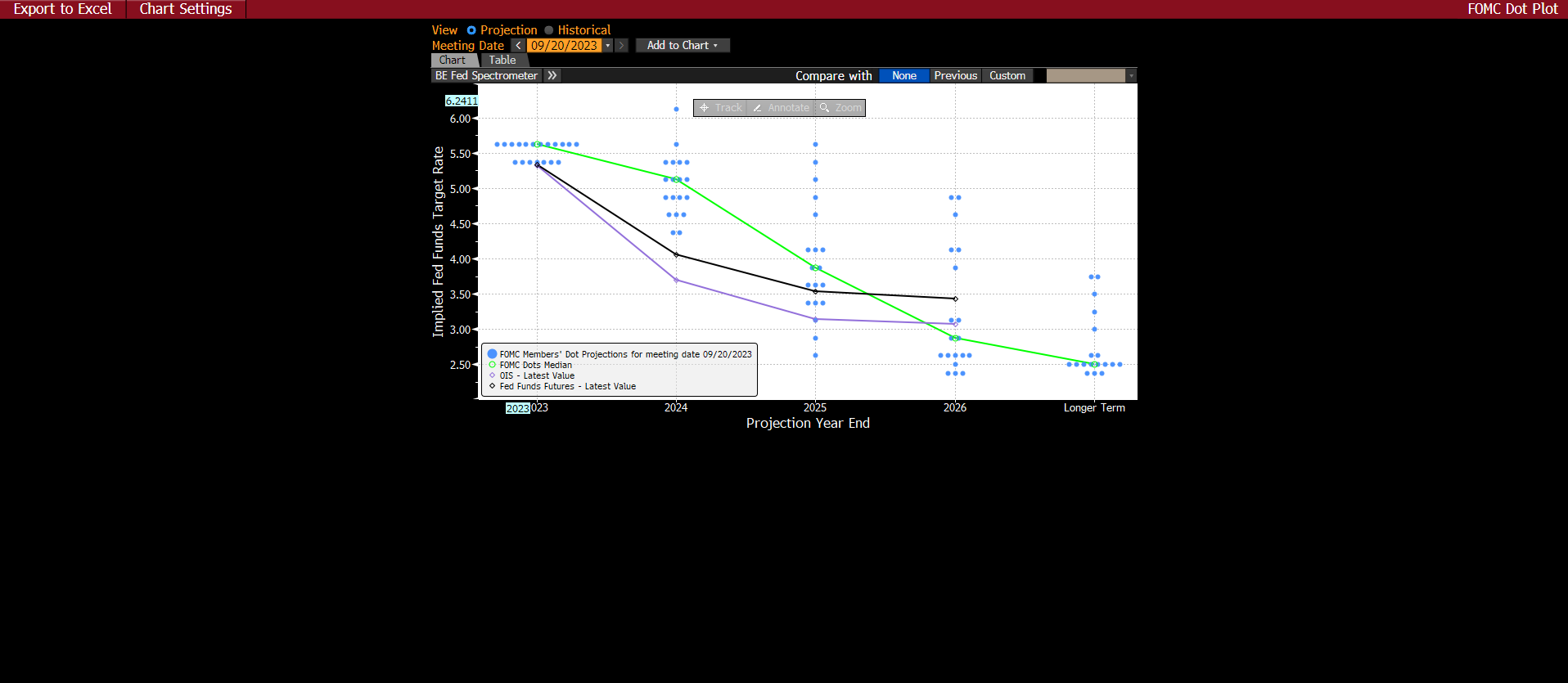
目前市场已经计入了明年5次降息的预期,which is a lot(图3,see Fed Funds Futures)。
2. 考虑到当下周期的特点,较深的降息预期能否materialize值得进一步关注
如此之深的降息预期是否可以materialize值得思考。在一个典型的衰退中,after a certain turning point(通常是在private sector信贷出现大幅下滑,且居民耗尽储蓄后), 经济将发生substantial contraction, which is a pattern applicable to all the 12 business cycles since WWII.
但当下的周期违背了这样的规律,这是因为疫情期间联储印钞规模在最高峰时达到了约为GDP 19%的规模,并通过财政政策和货币政策相结合的方式将大部分印出的钱直接通过支票转移支付给了居民。这使得居民在疫情期间积累了相当高的储蓄,并在疫情结束后支出这部分储蓄。这使得income-spending循环变得非常强劲,并引起了工资通胀。实际上,income-spending循环变得如此强劲,甚至在此次加息过程中发生的极为显著的credit contraction也被income growth抵消。
试着这样看经济,当我们谈论到经济增长时,我们可以用nominal GDP growth代表,而nominal GDP growth, in simple terms, 可以代表total spending.
Spending的资金可以来源于三种方式:或者是一个人的1) 收入, 或者他可以选择2) 借款(信贷),或者他可以选择动用自己的3) 储蓄。Okay, to summarize, 收入,信贷,或储蓄**。在通常的情况下,随着信贷出现大幅下滑,且居民耗尽储蓄(这两者在边际上对spending的贡献都转为负值),spending增速会出现下滑,而income growth往往不足以抵消credit contraction和savings耗尽的影响,从而使得nominal GDP growth出现如此显著的下滑,以至于扣除通胀后的real GDP growth由正转负(衰退的定义即为连续2个季度real GDP growth为负)。
但由于目前存在的wage inflation, 使得income增速在之前信贷极具紧缩且居民耗尽储蓄时仍保持在高位,从而抵消了这两者的影响(这是由于labor inflation有着和其他市场inflation不同的一项特征:labor market中上涨的价格由企业支付,而回到居民手中,therefore more income, therefore more spending;在其他大部分市场,例如天然气市场,如果发生通胀,上升的价格由居民支付,而回到企业手中,在这种情况下,由于上涨的价格多支出的金额将不会回到居民手中,therefore less disposable income, therefore less spending)。
另一方面,从总体的角度而言,当tightening使得nominal GDP growth从高位开始下降时仍维持在很高的水平,这意味着,从企业的视角而言,需求依然强劲,因此capacity一直维持在高位,这使得实际产出维持在高位(因此从real GDP growth的角度并未出现衰退)。
在这里我们遇到了历史上罕见的情况,即央行在过度宽松的货币政策导致严重的通胀(double-digit inflation rate)后立刻转向极为紧缩的货币政策。我们知道如果不这样做会发生什么,上世纪70年代的滞涨时期殷鉴不远:工资通胀不断螺旋上升,同时原材料价格不断上升,最终使得企业无力将增加的成本向终端消费者转移,从而使得企业出现亏损。与此同时,由于形成了“锚定的通胀预期”,这使得通胀不断地自我强化,直到极为紧缩的货币政策打破通胀预期并最终终结了大通胀(Volcker moment).
而在这次,我们意识到如果央行及时采取行动,将会极大缓解这一现象。nominal GDP growth将出现显著下滑,但由于产能本来就无法追上demand, 这使得nominal GDP growth下滑主要由通胀下跌驱动。试着这样看:on the one hand there is nominal demand, basically money pursing goods and services; on the other hand there is capacity (basically how many goods and services could be produced; capacity growth = productivity growth + employment growth). 由于capacity一直都被stretch to its limits(e.g. 始终保持在极高水平的产能利用率和极低的失业率),这意味着capacity一直在追逐demand, 而tightening使得nominal demand出现的下滑主要转化为了下降的通胀率。
3. 同样考虑到当下周期的特点,股票市场对未来的增长的定价可能存在偏差
这带来了下一个问题,就是之后增长的情况会如何。在一场典型的衰退中,after a certain turning point, 经济将发生substantial contraction. 但我们怀疑这一次是否会如此。我们理解为什么在一场典型的衰退中会发生如上文所说的情况,但鉴于tightening带来的主要影响已经逐渐fade away, 我们的猜测是,经济更可能出现逐步的下滑,而非collapse. 这使得我们怀疑市场对未来降息速率的定价是否准确。[另一方面,由于工资通胀仍在持续,过早过快的降息可能使得通胀出现反弹。]
目前美股仍包含了较高的增长预期。目前S&P 500分析师一致预期在4%左右,we are not sure if it would be accurate. 但另一方面,当我们试着理解股市未来的趋势时,我们应当回到资产的驱动因素。对于股市而言,主要的drivers包括1)增长,2)通胀,3)折现率(discounting rate)以及4)风险溢价(risk premium).
4. 考虑风险溢价(债券应当比现金收益率更高,股票应当比债券收益率更高):股市相对于现金及国债的风险溢价处于历史低位
在当下尤为值得关注的是风险溢价。正如你所知道的那样,in finance, higher risk demands higher yield. 这使得,at least theoretically, 债券的收益率应当比现金更高,股权的收益率应当比债券更高。
然而,目前的情况大约是,cash的收益率显著地超过5%,bond的收益率显著低于5%,stock的收益率在5%左右. 这意味着,stock的收益率显著地低于cash. 这是由于市场计入了显著的降息预期(你可以把它简单的理解为市场认为利率很可能在短期内下降,so it becomes less concerned that the equity's yields are temporarily lower than cash),同时计入了较高的增长率。但正如上文所讨论的那样,我们担心这两者可能同时存在风险。而且,无论市场对于这两者的定价是否准确,目前stock的risk premium相对于cash和bond都处于极低水平。
5. 考虑美债流动性:过多的供给和不足的需求可能推升长端美债利率
在另一方面,speaking of bond's yields, 我们需要考虑bond的供需关系。在相当长的时期内(at least since the great inflation in the 70s),尽管美债的发行量巨大,但从未遇到过需求不足的问题。这部分是由于美元是全球的储备货币,这意味着全球投资者对美元存在着favorable bias. 在实际中,尽管美国市场面对经常账户逆差,但由于对美国有大额经常账户顺差的经济体大多将其储蓄回流到美国,这使得美国成为金融资产的主要出口国,并保持经常账户逆差。
但在目前的情况下,美国需要发行的国债数额难以置信的多。而另一方面,国债的主要买家(包括外国购买者、银行以及央行)都已经持有巨额的国债,并且由于利率上升已经蒙受了显著的损失(至少以市场价格计价如此)。More specifically, 银行出于自身利益的考虑以及监管方面的考虑不太可能在近期如同过去那样大规模购买国债,而联储正在QT. 同时,出于对制裁可能被“武器化”的担忧,部分主权国家对于是否增持美元计价的金融资产存在疑虑。
而由于高企的赤字,美国政府将不得不发行大量的国债。在年内,他们主要通过发行短期国债金融融资,这些国债主要从逆回购市场进行融资(repo market),但这样的情况不能一直持续下去。未来发行债券的规模及结构将决定美债长端收益率是否因为需求不足而上升,如果发行的美债中,长期美债占比显著上升(which seems to be very likely),这将使得美债长端利率上升,并使得资金流出其他资产(包括股市),引起其他资产价格下跌。
6. Additional Notes
Anyhow, it is constantly challenging to time the market. 以上这些观察并非从时空维度而是从风险-收益的视角作出,有时,一个背离基本面的趋势可以持续an extended period of time. So, I am not saying that stock is going to crash, or it is going to crash right now. 但我相信这些是值得关注的风险,通过理解并追踪这些风险可以让我们一定程度上理解股市目前的定价水平,从而了解目前股票资产的吸引力。例如,目前股票资产是否存在价值,如果有,how much?
在讨论的这些事项中,最为不确定的是real growth. 由于缺乏典型的历史案例的参考,我们对于growth的预计存在较大的区间。Nevertheless, we will see. As the saying goes: “He who lives by the crystal ball will eat shattered glass." And the right way to trade, is to know how to react appropriately to the information available at each point in time. Thank you for your time and hopefully this long threads would be helpful to you.
* 在这里以household进行举例,但实际上对corporate和government也是同样的情况。
** 当我们考虑到它们对经济增长率的影响时,通常考虑的是它们边际上的增长率而非绝对水平,e.g. income growth, borrowing growth, etc.
这篇文章较长,我将主要的结论放在开头的部分:
1)由于避险因素及较深的降息预期驱动,长端美债利率下跌,驱动股指反弹;
2)考虑到当下周期的特点,较深的降息预期能否materialize值得进一步关注;如果市场对降息定价存在偏差,这意味着长期国债利率将可能出现反弹,这将对股市不利;
3)同样考虑到当下周期的特点,股票市场对未来的增长的定价可能存在偏差;如果这样的理解是正确的,未来的经济增长可能不及股市预期;
4)考虑风险溢价(债券应当比现金收益率更高,股票应当比债券收益率更高):股市相对于现金及国债的风险溢价处于历史低位
5)考虑美债流动性:过多的供给和不足的需求可能推升长端美债利率(a liquidity component in pricing)。如果这样的理解被证明是准确的,当长端美债收益率因流动性不足而上升时,资金将从其他资产流出,从而压低其他资产的价格
由于上述每一项都与长端国债利率或多或少的相关,所以标题取名为interest rate at the center of the market trend. 具体内容请见下文。
1. 由于避险因素及较深的降息预期驱动,长端美债利率下跌,驱动股指反弹
自从11月以来,美股已经从低位反弹到接近上一个反弹的高点。尽管股市走势受到不同因素的影响,但在目前的情况下,利率是影响股市走势的关键因素。
从10月下旬开始,受到巴以冲突以及降息预期的影响,T-bonds(longer-term maturities, usually 10 yrs or more)的收益率出现了显著的下行趋势(在图1中你可以看到从10月下旬开始市场逐步计入了显著的降息预期)。

与此同时,股指出现了显著的反弹(图2,Nasdaq, S&P500 and 10-year bond yield)。

目前市场已经计入了明年5次降息的预期,which is a lot(图3,see Fed Funds Futures)。
2. 考虑到当下周期的特点,较深的降息预期能否materialize值得进一步关注
如此之深的降息预期是否可以materialize值得思考。在一个典型的衰退中,after a certain turning point(通常是在private sector信贷出现大幅下滑,且居民耗尽储蓄后), 经济将发生substantial contraction, which is a pattern applicable to all the 12 business cycles since WWII.
但当下的周期违背了这样的规律,这是因为疫情期间联储印钞规模在最高峰时达到了约为GDP 19%的规模,并通过财政政策和货币政策相结合的方式将大部分印出的钱直接通过支票转移支付给了居民。这使得居民在疫情期间积累了相当高的储蓄,并在疫情结束后支出这部分储蓄。这使得income-spending循环变得非常强劲,并引起了工资通胀。实际上,income-spending循环变得如此强劲,甚至在此次加息过程中发生的极为显著的credit contraction也被income growth抵消。
试着这样看经济,当我们谈论到经济增长时,我们可以用nominal GDP growth代表,而nominal GDP growth, in simple terms, 可以代表total spending.
Spending的资金可以来源于三种方式:或者是一个人的1) 收入, 或者他可以选择2) 借款(信贷),或者他可以选择动用自己的3) 储蓄。Okay, to summarize, 收入,信贷,或储蓄**。在通常的情况下,随着信贷出现大幅下滑,且居民耗尽储蓄(这两者在边际上对spending的贡献都转为负值),spending增速会出现下滑,而income growth往往不足以抵消credit contraction和savings耗尽的影响,从而使得nominal GDP growth出现如此显著的下滑,以至于扣除通胀后的real GDP growth由正转负(衰退的定义即为连续2个季度real GDP growth为负)。
但由于目前存在的wage inflation, 使得income增速在之前信贷极具紧缩且居民耗尽储蓄时仍保持在高位,从而抵消了这两者的影响(这是由于labor inflation有着和其他市场inflation不同的一项特征:labor market中上涨的价格由企业支付,而回到居民手中,therefore more income, therefore more spending;在其他大部分市场,例如天然气市场,如果发生通胀,上升的价格由居民支付,而回到企业手中,在这种情况下,由于上涨的价格多支出的金额将不会回到居民手中,therefore less disposable income, therefore less spending)。
另一方面,从总体的角度而言,当tightening使得nominal GDP growth从高位开始下降时仍维持在很高的水平,这意味着,从企业的视角而言,需求依然强劲,因此capacity一直维持在高位,这使得实际产出维持在高位(因此从real GDP growth的角度并未出现衰退)。
在这里我们遇到了历史上罕见的情况,即央行在过度宽松的货币政策导致严重的通胀(double-digit inflation rate)后立刻转向极为紧缩的货币政策。我们知道如果不这样做会发生什么,上世纪70年代的滞涨时期殷鉴不远:工资通胀不断螺旋上升,同时原材料价格不断上升,最终使得企业无力将增加的成本向终端消费者转移,从而使得企业出现亏损。与此同时,由于形成了“锚定的通胀预期”,这使得通胀不断地自我强化,直到极为紧缩的货币政策打破通胀预期并最终终结了大通胀(Volcker moment).
而在这次,我们意识到如果央行及时采取行动,将会极大缓解这一现象。nominal GDP growth将出现显著下滑,但由于产能本来就无法追上demand, 这使得nominal GDP growth下滑主要由通胀下跌驱动。试着这样看:on the one hand there is nominal demand, basically money pursing goods and services; on the other hand there is capacity (basically how many goods and services could be produced; capacity growth = productivity growth + employment growth). 由于capacity一直都被stretch to its limits(e.g. 始终保持在极高水平的产能利用率和极低的失业率),这意味着capacity一直在追逐demand, 而tightening使得nominal demand出现的下滑主要转化为了下降的通胀率。
3. 同样考虑到当下周期的特点,股票市场对未来的增长的定价可能存在偏差
这带来了下一个问题,就是之后增长的情况会如何。在一场典型的衰退中,after a certain turning point, 经济将发生substantial contraction. 但我们怀疑这一次是否会如此。我们理解为什么在一场典型的衰退中会发生如上文所说的情况,但鉴于tightening带来的主要影响已经逐渐fade away, 我们的猜测是,经济更可能出现逐步的下滑,而非collapse. 这使得我们怀疑市场对未来降息速率的定价是否准确。[另一方面,由于工资通胀仍在持续,过早过快的降息可能使得通胀出现反弹。]
目前美股仍包含了较高的增长预期。目前S&P 500分析师一致预期在4%左右,we are not sure if it would be accurate. 但另一方面,当我们试着理解股市未来的趋势时,我们应当回到资产的驱动因素。对于股市而言,主要的drivers包括1)增长,2)通胀,3)折现率(discounting rate)以及4)风险溢价(risk premium).
4. 考虑风险溢价(债券应当比现金收益率更高,股票应当比债券收益率更高):股市相对于现金及国债的风险溢价处于历史低位
在当下尤为值得关注的是风险溢价。正如你所知道的那样,in finance, higher risk demands higher yield. 这使得,at least theoretically, 债券的收益率应当比现金更高,股权的收益率应当比债券更高。
然而,目前的情况大约是,cash的收益率显著地超过5%,bond的收益率显著低于5%,stock的收益率在5%左右. 这意味着,stock的收益率显著地低于cash. 这是由于市场计入了显著的降息预期(你可以把它简单的理解为市场认为利率很可能在短期内下降,so it becomes less concerned that the equity's yields are temporarily lower than cash),同时计入了较高的增长率。但正如上文所讨论的那样,我们担心这两者可能同时存在风险。而且,无论市场对于这两者的定价是否准确,目前stock的risk premium相对于cash和bond都处于极低水平。
5. 考虑美债流动性:过多的供给和不足的需求可能推升长端美债利率
在另一方面,speaking of bond's yields, 我们需要考虑bond的供需关系。在相当长的时期内(at least since the great inflation in the 70s),尽管美债的发行量巨大,但从未遇到过需求不足的问题。这部分是由于美元是全球的储备货币,这意味着全球投资者对美元存在着favorable bias. 在实际中,尽管美国市场面对经常账户逆差,但由于对美国有大额经常账户顺差的经济体大多将其储蓄回流到美国,这使得美国成为金融资产的主要出口国,并保持经常账户逆差。
但在目前的情况下,美国需要发行的国债数额难以置信的多。而另一方面,国债的主要买家(包括外国购买者、银行以及央行)都已经持有巨额的国债,并且由于利率上升已经蒙受了显著的损失(至少以市场价格计价如此)。More specifically, 银行出于自身利益的考虑以及监管方面的考虑不太可能在近期如同过去那样大规模购买国债,而联储正在QT. 同时,出于对制裁可能被“武器化”的担忧,部分主权国家对于是否增持美元计价的金融资产存在疑虑。
而由于高企的赤字,美国政府将不得不发行大量的国债。在年内,他们主要通过发行短期国债金融融资,这些国债主要从逆回购市场进行融资(repo market),但这样的情况不能一直持续下去。未来发行债券的规模及结构将决定美债长端收益率是否因为需求不足而上升,如果发行的美债中,长期美债占比显著上升(which seems to be very likely),这将使得美债长端利率上升,并使得资金流出其他资产(包括股市),引起其他资产价格下跌。
6. Additional Notes
Anyhow, it is constantly challenging to time the market. 以上这些观察并非从时空维度而是从风险-收益的视角作出,有时,一个背离基本面的趋势可以持续an extended period of time. So, I am not saying that stock is going to crash, or it is going to crash right now. 但我相信这些是值得关注的风险,通过理解并追踪这些风险可以让我们一定程度上理解股市目前的定价水平,从而了解目前股票资产的吸引力。例如,目前股票资产是否存在价值,如果有,how much?
在讨论的这些事项中,最为不确定的是real growth. 由于缺乏典型的历史案例的参考,我们对于growth的预计存在较大的区间。Nevertheless, we will see. As the saying goes: “He who lives by the crystal ball will eat shattered glass." And the right way to trade, is to know how to react appropriately to the information available at each point in time. Thank you for your time and hopefully this long threads would be helpful to you.
* 在这里以household进行举例,但实际上对corporate和government也是同样的情况。
** 当我们考虑到它们对经济增长率的影响时,通常考虑的是它们边际上的增长率而非绝对水平,e.g. income growth, borrowing growth, etc.


21 38
Deleveraging emanates from a dysfunction of the free market to generate credit expansion. Therefore the solution to deleveraging, a process referred to as "reflation", usually includes a component that the government (or gov + central bank) replaces part of the function of the free market to generate credit expansion, oftentimes in part by printing money to monetize the debt, basically providing credit to the economy directly or indirectly.
At another level, typically, during deleveragings, the equity market could have ups and downs as a reaction to the policy promulgated. However, whether such rally could be sustainable depends on the effectiveness of such policy. If the policy fails to address the root of the problem, the rally may be of a temporary nature. If one has to bet on an economy in deleveraging, in my opinion, it probably is not a bad idea to consider betting on long-duration rate security (bonds that are free from credit risk) as the macro environment could be meaningfully favorable to it (low growth and low inflation).
PD: By stating the above I am not trying to comment on any specific deleveraging, but share a perspective in relation to the mechanics of deleveraging on a general basis. Hopefully it could be helpful to you and thank you for taking time to read it.
At another level, typically, during deleveragings, the equity market could have ups and downs as a reaction to the policy promulgated. However, whether such rally could be sustainable depends on the effectiveness of such policy. If the policy fails to address the root of the problem, the rally may be of a temporary nature. If one has to bet on an economy in deleveraging, in my opinion, it probably is not a bad idea to consider betting on long-duration rate security (bonds that are free from credit risk) as the macro environment could be meaningfully favorable to it (low growth and low inflation).
PD: By stating the above I am not trying to comment on any specific deleveraging, but share a perspective in relation to the mechanics of deleveraging on a general basis. Hopefully it could be helpful to you and thank you for taking time to read it.
9 00