即刻App年轻人的同好社区
下载
今年五月底, 我开车从西雅图到湾区旅行。5月24号这天的行程是从Eureka到 San Jose。 这天是2025到2026赛季英超的最后一轮,于是我打开Youtube TV, 边开车边“收听”水晶宫对阿森纳的比赛。
行驶在北加州的山里, 信号断断续续,常常听一会就卡住了。 但是我已经不在乎 - 这是整个赛季最无关紧要的一场比赛, 我只是想在有信号的时候听到球队的声音, 听到他们在庆祝成为本赛季的冠军, 那就够了。
由此, 我想到成为阿森纳球迷的这些年来,那些比赛和我自己的生活交织在一起, 比赛的记忆也就是生活的记忆。用本文记录一下我自己印象最深刻的30场阿森纳比赛。 这些比赛本身不一定是阿森纳最精彩的比赛, 但是它们是我生活的一个个锚点。
5/30/2026: 穿上20年前的下摆都秃噜了的一件阿森纳hoodie, 在Lake Tahoe的酒店看了决赛。结果意料之中, 但还是略感叹缺了那么一点点运气。
4/19/2026: Man City Away 1:2。看完了心里堵得什么也做不了,于是到开了半个多小时到downtown, 再坐ferry到对面的Bainbridge Island原船打了来回散心。
3/14/2026:Everton Home 2:0. 教授为阿森纳签下的最后一名球员先进球再门线救险, 阻挡了曼城。道曼成为为阿森纳进球的最年轻的球员, 从此这个排名再也不用提法布雷加斯的名字。
1/8/2026: Liverpool Away 0:0. 逛完亚特兰大的可乐博物馆, 坐在外面的椅子上看了上半场。略胸闷。
4/08/2025:Real Madrid Home 3:0 春光明媚的一个正午, 赖斯的两粒任意球看得我在地毯上滑跪。
2/2/2025: Man City Home 5:1 这是我比较低沉的一段时间, 这场比赛给了我一些安慰和勇气。
11/30/2024:West Ham Home 5:2 一个人在温哥华的酒店里看的。
9/22/2024: Man City Home 2:2 一般来说我不会过分关注结果, 但这个结果让我十分扼腕。
4/23/2024: Chelsea Home 5:0 爽。
4/17/2024: Bayern Munich Away 0:1 这天在Santa Cruz的教堂参加一个老朋友的celebration of life. 这是我们在美国唯一的一个深交的朋友,十年间建立了情同父子的交情。 仪式后开车离开, 差不多每个10来分钟停下来看看比分,直到比赛结束。
2/24/2024: New Castle 4:1 这场之前连续几个赛季在这个破队身上吃亏,到现在我还记得当时脑子里自己冒出来的话:that’s how you revenge. (由电影The Town里的台词“that’s how you drive a truck”而来)
9/3/2023: Man Utd 3:1. 这个赛季开赛的时候,其实心底对于对阵传统强队是没底的。 这场球给了信心。
4/26/2023: Man City Away 1:4. 打不过, 真的打不过。
3/16/2023: Sporting Lisbon Home 1:1, 欧联杯点球告负被淘汰。 这天我到前司老领导的新公司去看他。出发前我想:一个里斯本竞技不足挂齿。 见到前老板, 参观了他极具设计感的办公室, 在面朝大海的咖啡厅聊天。 出门就看到输球的消息。
5/12/2022:Tottenham Away 0:3 疫情后第一次出门旅行。在Santa Barbara西班牙风格的Superior Court里的草坪上, 眼睁睁看着球队0:3输给死敌,阿尔特塔时代第一次冲击前四失败。
10/17/2020: Man City Away 0:1 这天出去跟经济看房子。设定好了录像, 回来当直播看, 输球了感到伪直播没意思。 不到一个月后的双十一我们买到了心仪的房子。
7/8/2020: Man City FA Cup Semi-Final 2:0 这场比赛是我真正对阿尔特塔有了信心的比赛。 这场前后有英文报道, 标题就叫 “Arteta Gaining Gravitas”。 那时候媒体开始注意到他对于整个俱乐部有了掌控。
5/19/2019: Chelsea UEFA Cup Final 4:1. 这场之后我就觉得艾梅里该走了。
12/5/2018: Man Utd Away 2:2. 这场在奥兰多迪士尼, 一边排队一边看的。 当时觉得拉什福德真厉害, 他一拿球我就揪心。 觉得艾梅里是个好教练。
5/3/2018: Atletico Madrid Away 0:1. 这是温格宣布离任后最后一场有可能争夺奖杯的比赛。球队尽力了, 实力所限。
5/27/2017: Chelsea FA Cup Final. 这是温格后期拿到的三个足总杯里分量最重的一个。 这个夏天我和亚马逊的一群印度同事疯狂地玩了一个夏天, 那是我职场比较开心的一段时间。
10/22/2013:Dortmund Home 1:2. 这是我在密西根大学读研的第一个学期,这个秋假在芝加哥,这天在芝加哥的一个酒吧里。 有个看起来颇为精英但也很和善的中年人和我一起边喝啤酒边看了这场比赛。
2/26/2012:Tottenham Home 5:2 两球落后的时候我觉得这场不会输, 但是只要能打平我就很满足了,哪想到是这样的大翻盘。
2/16/2011:Barcelona Home 2:1 the best of Wenger ball.
10/31/2009: Tottenham Home 3:0 这天从北美回国,这场比赛在北京的一个如家酒店看的网络直播。 法布雷加斯直捣黄龙, 让人觉得熬夜值了。
3/4/2008: AC Milan Away 2:0. 其实到这场比赛的时候,联赛大势已去了, 虽然赢得了比赛,但有点像红楼梦里贾家开始露出衰败迹象的感觉。
3/29/2008: Bolton Away 3:2 这是温格时期印象比较深刻的展现斗志的比赛。
4/17/2007: Man City 3:1 这天在San Diego沿着高速公路走了一段才找到一个咖啡屋看比赛。 那个时候的曼城还不强, 就算没能力争冠的阿森纳打曼城也如砍瓜切菜。
5/17/2006: Barcelona 1:2. 虽然心痛,但仍然感到骄傲, 感到球队有未来。
5/21/2005:Man Utd 0:0 温格时期防守的经典一役。 这是让我感到I belong的一战。
写在最后: 明天就是新赛季的第一天了。 今天晚上听Handbrake Off (The Athletic的阿森纳主题播客)开场的时候Ian Stone,Amy Lawrence和 James McNicholas各自回忆了上一次阿森纳以冠军身份开局 - 2004年的时候他们的记忆。 Ian还在上小学, Amy回忆起在老挝度假看到法布雷加斯在社区盾的惊艳登场, James回忆起和孩子们相处。 主持人的22年, 自己的22年, 因为阿森纳有了交集。
不论新的赛季怎样, 未来的赛季怎样, 我想我会一直支持阿森纳。 微斯人, 吾谁与归!
行驶在北加州的山里, 信号断断续续,常常听一会就卡住了。 但是我已经不在乎 - 这是整个赛季最无关紧要的一场比赛, 我只是想在有信号的时候听到球队的声音, 听到他们在庆祝成为本赛季的冠军, 那就够了。
由此, 我想到成为阿森纳球迷的这些年来,那些比赛和我自己的生活交织在一起, 比赛的记忆也就是生活的记忆。用本文记录一下我自己印象最深刻的30场阿森纳比赛。 这些比赛本身不一定是阿森纳最精彩的比赛, 但是它们是我生活的一个个锚点。
5/30/2026: 穿上20年前的下摆都秃噜了的一件阿森纳hoodie, 在Lake Tahoe的酒店看了决赛。结果意料之中, 但还是略感叹缺了那么一点点运气。
4/19/2026: Man City Away 1:2。看完了心里堵得什么也做不了,于是到开了半个多小时到downtown, 再坐ferry到对面的Bainbridge Island原船打了来回散心。
3/14/2026:Everton Home 2:0. 教授为阿森纳签下的最后一名球员先进球再门线救险, 阻挡了曼城。道曼成为为阿森纳进球的最年轻的球员, 从此这个排名再也不用提法布雷加斯的名字。
1/8/2026: Liverpool Away 0:0. 逛完亚特兰大的可乐博物馆, 坐在外面的椅子上看了上半场。略胸闷。
4/08/2025:Real Madrid Home 3:0 春光明媚的一个正午, 赖斯的两粒任意球看得我在地毯上滑跪。
2/2/2025: Man City Home 5:1 这是我比较低沉的一段时间, 这场比赛给了我一些安慰和勇气。
11/30/2024:West Ham Home 5:2 一个人在温哥华的酒店里看的。
9/22/2024: Man City Home 2:2 一般来说我不会过分关注结果, 但这个结果让我十分扼腕。
4/23/2024: Chelsea Home 5:0 爽。
4/17/2024: Bayern Munich Away 0:1 这天在Santa Cruz的教堂参加一个老朋友的celebration of life. 这是我们在美国唯一的一个深交的朋友,十年间建立了情同父子的交情。 仪式后开车离开, 差不多每个10来分钟停下来看看比分,直到比赛结束。
2/24/2024: New Castle 4:1 这场之前连续几个赛季在这个破队身上吃亏,到现在我还记得当时脑子里自己冒出来的话:that’s how you revenge. (由电影The Town里的台词“that’s how you drive a truck”而来)
9/3/2023: Man Utd 3:1. 这个赛季开赛的时候,其实心底对于对阵传统强队是没底的。 这场球给了信心。
4/26/2023: Man City Away 1:4. 打不过, 真的打不过。
3/16/2023: Sporting Lisbon Home 1:1, 欧联杯点球告负被淘汰。 这天我到前司老领导的新公司去看他。出发前我想:一个里斯本竞技不足挂齿。 见到前老板, 参观了他极具设计感的办公室, 在面朝大海的咖啡厅聊天。 出门就看到输球的消息。
5/12/2022:Tottenham Away 0:3 疫情后第一次出门旅行。在Santa Barbara西班牙风格的Superior Court里的草坪上, 眼睁睁看着球队0:3输给死敌,阿尔特塔时代第一次冲击前四失败。
10/17/2020: Man City Away 0:1 这天出去跟经济看房子。设定好了录像, 回来当直播看, 输球了感到伪直播没意思。 不到一个月后的双十一我们买到了心仪的房子。
7/8/2020: Man City FA Cup Semi-Final 2:0 这场比赛是我真正对阿尔特塔有了信心的比赛。 这场前后有英文报道, 标题就叫 “Arteta Gaining Gravitas”。 那时候媒体开始注意到他对于整个俱乐部有了掌控。
5/19/2019: Chelsea UEFA Cup Final 4:1. 这场之后我就觉得艾梅里该走了。
12/5/2018: Man Utd Away 2:2. 这场在奥兰多迪士尼, 一边排队一边看的。 当时觉得拉什福德真厉害, 他一拿球我就揪心。 觉得艾梅里是个好教练。
5/3/2018: Atletico Madrid Away 0:1. 这是温格宣布离任后最后一场有可能争夺奖杯的比赛。球队尽力了, 实力所限。
5/27/2017: Chelsea FA Cup Final. 这是温格后期拿到的三个足总杯里分量最重的一个。 这个夏天我和亚马逊的一群印度同事疯狂地玩了一个夏天, 那是我职场比较开心的一段时间。
10/22/2013:Dortmund Home 1:2. 这是我在密西根大学读研的第一个学期,这个秋假在芝加哥,这天在芝加哥的一个酒吧里。 有个看起来颇为精英但也很和善的中年人和我一起边喝啤酒边看了这场比赛。
2/26/2012:Tottenham Home 5:2 两球落后的时候我觉得这场不会输, 但是只要能打平我就很满足了,哪想到是这样的大翻盘。
2/16/2011:Barcelona Home 2:1 the best of Wenger ball.
10/31/2009: Tottenham Home 3:0 这天从北美回国,这场比赛在北京的一个如家酒店看的网络直播。 法布雷加斯直捣黄龙, 让人觉得熬夜值了。
3/4/2008: AC Milan Away 2:0. 其实到这场比赛的时候,联赛大势已去了, 虽然赢得了比赛,但有点像红楼梦里贾家开始露出衰败迹象的感觉。
3/29/2008: Bolton Away 3:2 这是温格时期印象比较深刻的展现斗志的比赛。
4/17/2007: Man City 3:1 这天在San Diego沿着高速公路走了一段才找到一个咖啡屋看比赛。 那个时候的曼城还不强, 就算没能力争冠的阿森纳打曼城也如砍瓜切菜。
5/17/2006: Barcelona 1:2. 虽然心痛,但仍然感到骄傲, 感到球队有未来。
5/21/2005:Man Utd 0:0 温格时期防守的经典一役。 这是让我感到I belong的一战。
写在最后: 明天就是新赛季的第一天了。 今天晚上听Handbrake Off (The Athletic的阿森纳主题播客)开场的时候Ian Stone,Amy Lawrence和 James McNicholas各自回忆了上一次阿森纳以冠军身份开局 - 2004年的时候他们的记忆。 Ian还在上小学, Amy回忆起在老挝度假看到法布雷加斯在社区盾的惊艳登场, James回忆起和孩子们相处。 主持人的22年, 自己的22年, 因为阿森纳有了交集。
不论新的赛季怎样, 未来的赛季怎样, 我想我会一直支持阿森纳。 微斯人, 吾谁与归!

2 10
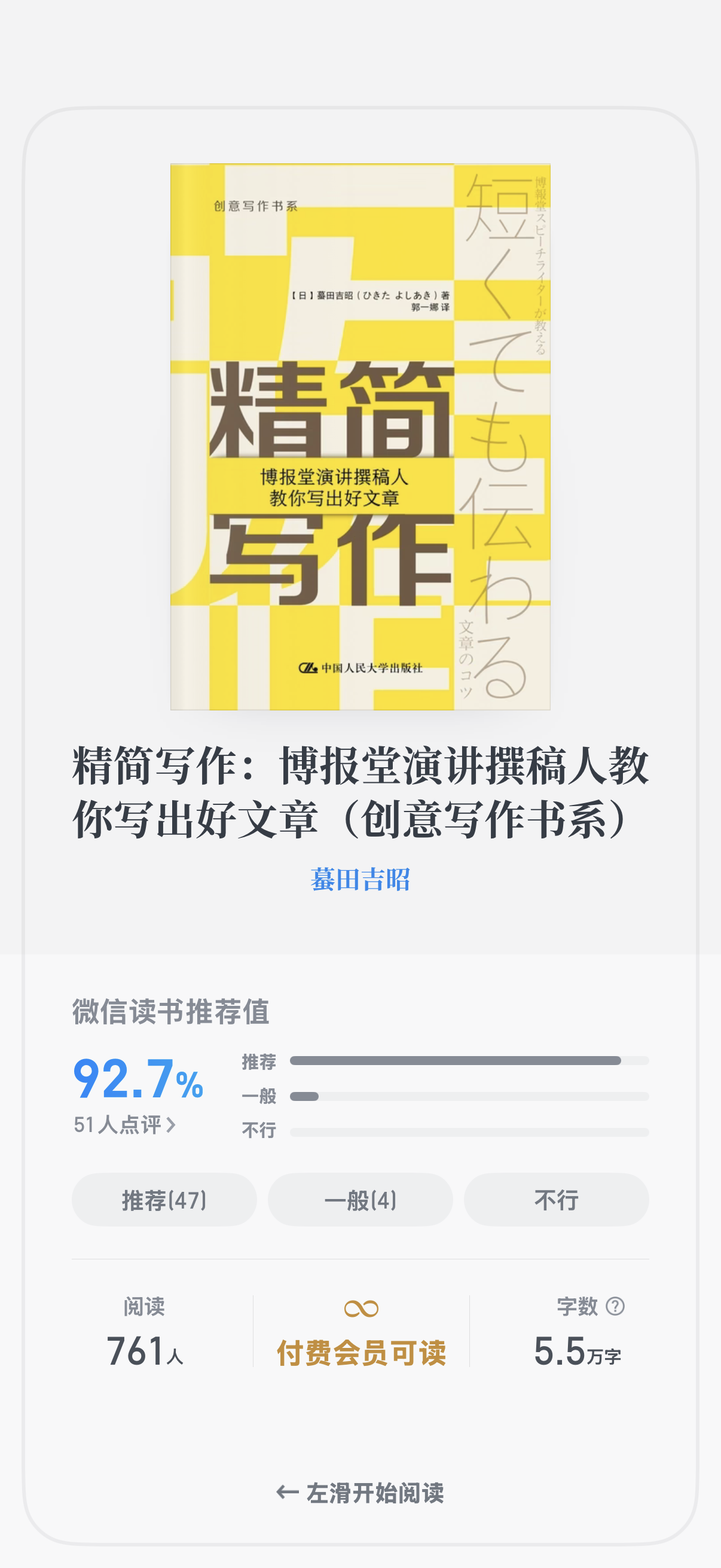
《精简写作》
这本书验证了我的一个观点:简洁确实应该是写作的重要目标之一。
至于技巧,这本书里讲到的多数我都在工作中使用过。我认为最有价值的是如下这些:
- 对于商业文书来说最重要的,是在不给对方造成压力的情况下,告知“该如何行动”。态度是否傲慢,是次要的。
- 怕别人说三道四,一旦写出来就会被批评“傲慢”……越想避免这种情况,文章就会写得越长、越支离破碎。
- 总结能力是精简写作的根本能力。总结应该限制在稿纸两行内,即40字以内。
- 如果是做事经常半途而废的人,文章开头可能会写得很详细,但写了一半后就变得笼统粗略。
- 如果能给事物起个准确恰当的名称或标题,就能立刻了解其从属和要点,加快信息传播速度。
- 一气呵成,再大幅删减。
- 极力抑制自我表达,思考能给对方带来什么。
这本书验证了我的一个观点:简洁确实应该是写作的重要目标之一。
至于技巧,这本书里讲到的多数我都在工作中使用过。我认为最有价值的是如下这些:
- 对于商业文书来说最重要的,是在不给对方造成压力的情况下,告知“该如何行动”。态度是否傲慢,是次要的。
- 怕别人说三道四,一旦写出来就会被批评“傲慢”……越想避免这种情况,文章就会写得越长、越支离破碎。
- 总结能力是精简写作的根本能力。总结应该限制在稿纸两行内,即40字以内。
- 如果是做事经常半途而废的人,文章开头可能会写得很详细,但写了一半后就变得笼统粗略。
- 如果能给事物起个准确恰当的名称或标题,就能立刻了解其从属和要点,加快信息传播速度。
- 一气呵成,再大幅删减。
- 极力抑制自我表达,思考能给对方带来什么。
1 31
《Adult Children of Emotionally Immature Parents》
It’s a fantastic book - I would recommend it to anyone dealing with past or present relationship pains - not just the parental-child relationship. The ideas in this book shed light on all kinds of difficult, unpleasant, or rocky relationships.
My three takeaways:
- Know (and decide) what you are in: not all human connections are “relationships”, most are “relatedness”. Relationships take effort from both sides, they are deep, soothing, and secure. Relatedness are connections that you are thrown into, and it’s not something you build by choice. With emotionally immature people it’s hard to form relationships, and you will have to be realistic and focus on relatedness - as in the case of the parent-child pair.
- Be (ruthlessly) objective: observe the other party, assess his/her maturity level, detach yourself from the “relationship” role, and shift to problem-solving mode. Be ruthlessly, motionlessly OBJECTIVE.
- Life is short. Just like there is the time value of money, emotions have a time value too. Invest in relationships that compound rewards, not relatedness.
It’s a fantastic book - I would recommend it to anyone dealing with past or present relationship pains - not just the parental-child relationship. The ideas in this book shed light on all kinds of difficult, unpleasant, or rocky relationships.
My three takeaways:
- Know (and decide) what you are in: not all human connections are “relationships”, most are “relatedness”. Relationships take effort from both sides, they are deep, soothing, and secure. Relatedness are connections that you are thrown into, and it’s not something you build by choice. With emotionally immature people it’s hard to form relationships, and you will have to be realistic and focus on relatedness - as in the case of the parent-child pair.
- Be (ruthlessly) objective: observe the other party, assess his/her maturity level, detach yourself from the “relationship” role, and shift to problem-solving mode. Be ruthlessly, motionlessly OBJECTIVE.
- Life is short. Just like there is the time value of money, emotions have a time value too. Invest in relationships that compound rewards, not relatedness.

0 00


《The Intelligent Investor》
投资方面的经典著作, 大抵都会收敛到人生的大道理上。 本书也不例外, 可以看成是西方版的警世通言。 另外为这个版本作注释的Jason Zweig真是大师级的作家, 行文真是太优美了。
My main takeaways:
无情:要让理性接管操作, 情感可以在操作完成后发生。
While enthusiasm may be necessary for great accomplishments elsewhere, on Wall Street it almost invariably leads to disaster.
Obvious prospects for physical growth in a business do not translate into obvious profit for investors
Without policies and procedures to guide you, you will be at the mercy of the market's ever-changing moods – and your own.
Take no action without reviewing your original rationale and determining that there’s a reasonable basis for changing it grounded in data and evidence, not just the opinions of random people online.
As a scientist, I believe in proof without certainty, while other people tend to believe in certainty without proof. - Ashley Montagu
Traders at large funds want to avoid “wrong and alone” rather than pursuing “right and alone”
To beat the professionals, however, you can’t play their game. You must play your own game.
There are old pilots, and there are bold pilots, but there are no old, bold pilots.
To a man with a hammer, everything looks like a nail.
设置正确的目标函数,be practical, 切勿“争气”:
Instead of seeking to fulfill their own financial goals, they will instead strive to beat everybody else and become up to twice as likely to buy a highly risky stock.
Caution against crowd thinking: “there are no barriers to entry, no easy way to authenticate claims of expertise, and no registry of how accurate or how extreme the opinions are”
风险预期:
Risk doesn’t stay constant most of your life. It might not even stay constant from hour to hour. That’s why Graham warns against picking your portfolio based on how much risk you think you can stomach.
Your tolerance foIt is human nature to believe, when times are calm, that you will do the right thing in the heat of the moment. In a market crash, however, willpower is worthless. You can stay calm only if you have practiced beneficial rules until they’ve become good habits.
不光是投资, 其实很多事情都是: 比如平地走路十分容易, 现在想象一下在帝国大厦顶楼,屋檐最外一圈, 风呼呼低吹的时候走路, 好像也没那么容易。 能够visualize 风险, 就可以提前预设safety margin. 但我觉得更重要的是, 可以有意识地训练:1)训练自己预判风险的准确性,和2)在风险下正常操作。 这些都需要长期,有意识的训练。 这两个训练适合任何事情。
慢既是快:
“The faster you run, the behinder you get”
大即是小:
It is bad business to accept an acknowledged possibility of a loss of principal in exchange for a mere 1 or 2% of additional yearly income.
不要把专注力放在扣扣嗖嗖薅羊毛上, 做可以内化的事情, 可以产生复利的事情。
行即是停:
The more things change, the more they stay the same. Understanding that we've been here before will help you avoid going there yourself.
钱是赚不完的:
Be wary of new issues because “most new issues are sold under "favorable market conditions” - which means favorable for the seller and consequently less favorable for the buyer.
过去一年美股最热门的两个IPO: FIG和SPCX。前一个我原始股抽中, 翻了三番没卖, 后来卖在发行价。 后一个没抽中,现在看来是逃过一劫。 勿着急, 钱是赚不完的, 总会有新机会。
Don’t, just don’t:
Focusing what to do is fun, but focusing on what not to do is vital.
The temptation to do something is one of the worst temptations that investors face. There is always some bluebird on the horizon.
要做就认真做:
As an investor you cannot soundly become “half a businessman”, expecting thereby to achieve half the normal rate of business profits on your funds.
如果认为一个事情值得去做, 就在资源范围内把它做好。spare no effort and go all the way. 绝命毒师里有一集Mike对Jesse说“don’t take half measures”.
价值投资的核心理论:
There are two possible ways for the intelligentnt investor to benefit from the price pendulum swings: the way of timing and the way of pricing.
Don’t predict the timing.
In the short run, fundamentals often don't matter; in the long run, they always do.
In the long run, high returns don't come from great expectations; often, they come from the reversal of gloomy expectations.
The risk of paying too high a price for good quality stocks is not the chief hazard. The chief losses to investors come from the purchase of low-quality securities at times of a favorable business condition.
The margin of safety is always dependent on the price paid.
The whole purpose of diversification is to reduce risk. So, if you don't own any losers during up markets, you won't own any winners during down markets.
This, in turn, means that a well-diversified portfolio should always be at least partly disappointing, although the disappointments should come from different investments at different times.
Diversification will not feel good all the time, but it will feel good over time.This margin of safety isn't free.The price you pay is short-term psychological pain. The benefit you get is long-term financial gain.
They search for discrepancies between the value of a business and the price of small pieces of that business in the market. Essentially, they exploit those discrepancies without the efficient market theorists' concern as to whether the stocks are bought on Monday or Thursday.
The investors simply focus on two variables: price and value.
I'm convinced that there's much inefficiency in the market. These Graham and Doddsville investors have successfully exploited gaps between price and value. When the price of a stock can be influenced by a herd on Wall Street, with prices set at the margin by the most emotional person (or the greediest person, or the most depressed person), it is hard to argue that the market always prices rationally.
In fact, market prices are frequently nonsensical.
看人下菜碟:
A company’s management matters: Good managements produce a good average market price, and bad management produces bad market prices.
我有一个选股的策略: 不要买我能面试进去的公司, 那里的人不比我聪明, 不会把公司比我管理的更好。
从难处着手:
All things excellent are as difficult as they are rare.
To achieve satisfactory investment results is easier than most people realize. To achieve superior results is harder than it looks.
投资方面的经典著作, 大抵都会收敛到人生的大道理上。 本书也不例外, 可以看成是西方版的警世通言。 另外为这个版本作注释的Jason Zweig真是大师级的作家, 行文真是太优美了。
My main takeaways:
无情:要让理性接管操作, 情感可以在操作完成后发生。
While enthusiasm may be necessary for great accomplishments elsewhere, on Wall Street it almost invariably leads to disaster.
Obvious prospects for physical growth in a business do not translate into obvious profit for investors
Without policies and procedures to guide you, you will be at the mercy of the market's ever-changing moods – and your own.
Take no action without reviewing your original rationale and determining that there’s a reasonable basis for changing it grounded in data and evidence, not just the opinions of random people online.
As a scientist, I believe in proof without certainty, while other people tend to believe in certainty without proof. - Ashley Montagu
Traders at large funds want to avoid “wrong and alone” rather than pursuing “right and alone”
To beat the professionals, however, you can’t play their game. You must play your own game.
There are old pilots, and there are bold pilots, but there are no old, bold pilots.
To a man with a hammer, everything looks like a nail.
设置正确的目标函数,be practical, 切勿“争气”:
Instead of seeking to fulfill their own financial goals, they will instead strive to beat everybody else and become up to twice as likely to buy a highly risky stock.
Caution against crowd thinking: “there are no barriers to entry, no easy way to authenticate claims of expertise, and no registry of how accurate or how extreme the opinions are”
风险预期:
Risk doesn’t stay constant most of your life. It might not even stay constant from hour to hour. That’s why Graham warns against picking your portfolio based on how much risk you think you can stomach.
Your tolerance foIt is human nature to believe, when times are calm, that you will do the right thing in the heat of the moment. In a market crash, however, willpower is worthless. You can stay calm only if you have practiced beneficial rules until they’ve become good habits.
不光是投资, 其实很多事情都是: 比如平地走路十分容易, 现在想象一下在帝国大厦顶楼,屋檐最外一圈, 风呼呼低吹的时候走路, 好像也没那么容易。 能够visualize 风险, 就可以提前预设safety margin. 但我觉得更重要的是, 可以有意识地训练:1)训练自己预判风险的准确性,和2)在风险下正常操作。 这些都需要长期,有意识的训练。 这两个训练适合任何事情。
慢既是快:
“The faster you run, the behinder you get”
大即是小:
It is bad business to accept an acknowledged possibility of a loss of principal in exchange for a mere 1 or 2% of additional yearly income.
不要把专注力放在扣扣嗖嗖薅羊毛上, 做可以内化的事情, 可以产生复利的事情。
行即是停:
The more things change, the more they stay the same. Understanding that we've been here before will help you avoid going there yourself.
钱是赚不完的:
Be wary of new issues because “most new issues are sold under "favorable market conditions” - which means favorable for the seller and consequently less favorable for the buyer.
过去一年美股最热门的两个IPO: FIG和SPCX。前一个我原始股抽中, 翻了三番没卖, 后来卖在发行价。 后一个没抽中,现在看来是逃过一劫。 勿着急, 钱是赚不完的, 总会有新机会。
Don’t, just don’t:
Focusing what to do is fun, but focusing on what not to do is vital.
The temptation to do something is one of the worst temptations that investors face. There is always some bluebird on the horizon.
要做就认真做:
As an investor you cannot soundly become “half a businessman”, expecting thereby to achieve half the normal rate of business profits on your funds.
如果认为一个事情值得去做, 就在资源范围内把它做好。spare no effort and go all the way. 绝命毒师里有一集Mike对Jesse说“don’t take half measures”.
价值投资的核心理论:
There are two possible ways for the intelligentnt investor to benefit from the price pendulum swings: the way of timing and the way of pricing.
Don’t predict the timing.
In the short run, fundamentals often don't matter; in the long run, they always do.
In the long run, high returns don't come from great expectations; often, they come from the reversal of gloomy expectations.
The risk of paying too high a price for good quality stocks is not the chief hazard. The chief losses to investors come from the purchase of low-quality securities at times of a favorable business condition.
The margin of safety is always dependent on the price paid.
The whole purpose of diversification is to reduce risk. So, if you don't own any losers during up markets, you won't own any winners during down markets.
This, in turn, means that a well-diversified portfolio should always be at least partly disappointing, although the disappointments should come from different investments at different times.
Diversification will not feel good all the time, but it will feel good over time.This margin of safety isn't free.The price you pay is short-term psychological pain. The benefit you get is long-term financial gain.
They search for discrepancies between the value of a business and the price of small pieces of that business in the market. Essentially, they exploit those discrepancies without the efficient market theorists' concern as to whether the stocks are bought on Monday or Thursday.
The investors simply focus on two variables: price and value.
I'm convinced that there's much inefficiency in the market. These Graham and Doddsville investors have successfully exploited gaps between price and value. When the price of a stock can be influenced by a herd on Wall Street, with prices set at the margin by the most emotional person (or the greediest person, or the most depressed person), it is hard to argue that the market always prices rationally.
In fact, market prices are frequently nonsensical.
看人下菜碟:
A company’s management matters: Good managements produce a good average market price, and bad management produces bad market prices.
我有一个选股的策略: 不要买我能面试进去的公司, 那里的人不比我聪明, 不会把公司比我管理的更好。
从难处着手:
All things excellent are as difficult as they are rare.
To achieve satisfactory investment results is easier than most people realize. To achieve superior results is harder than it looks.

0 00
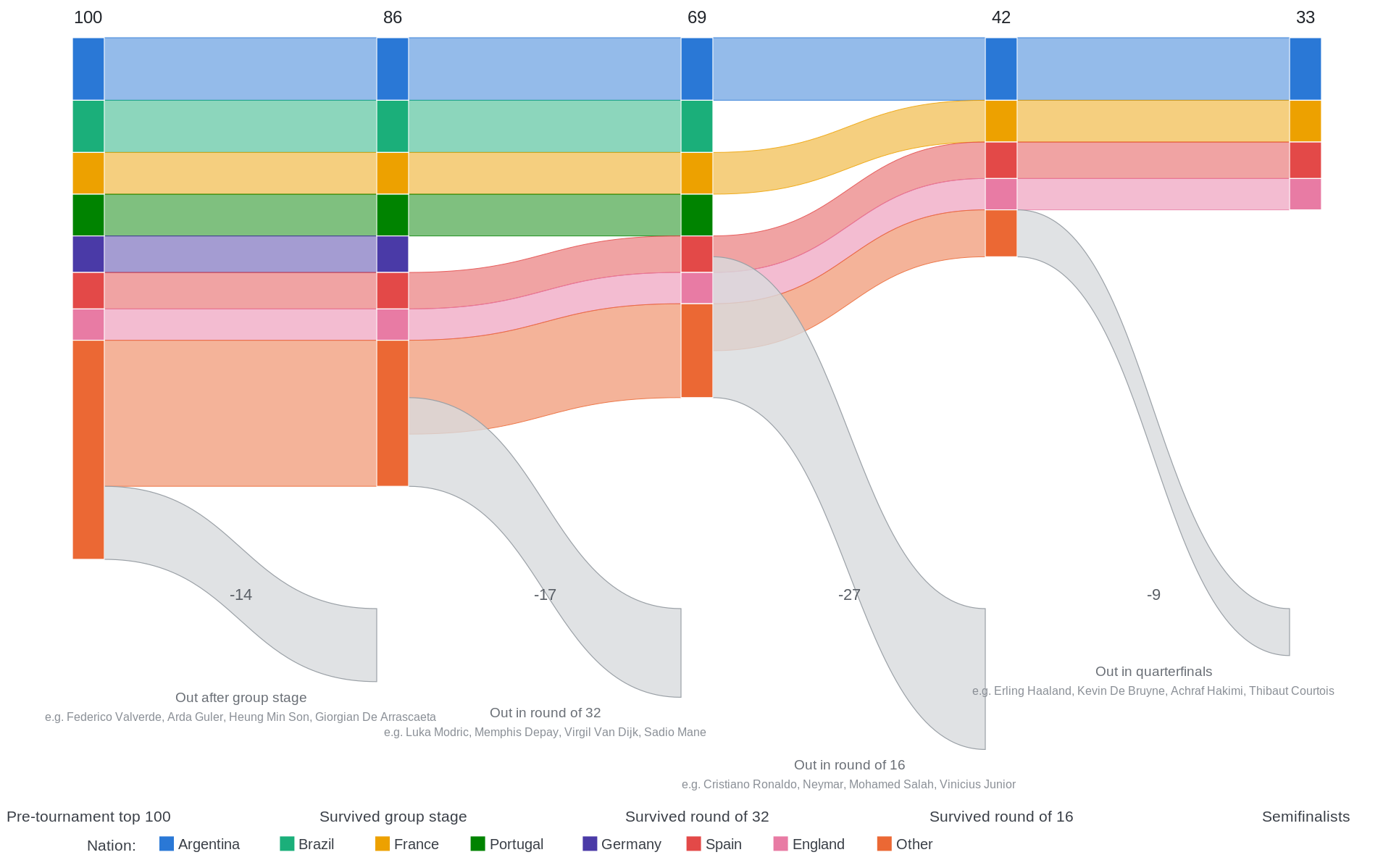
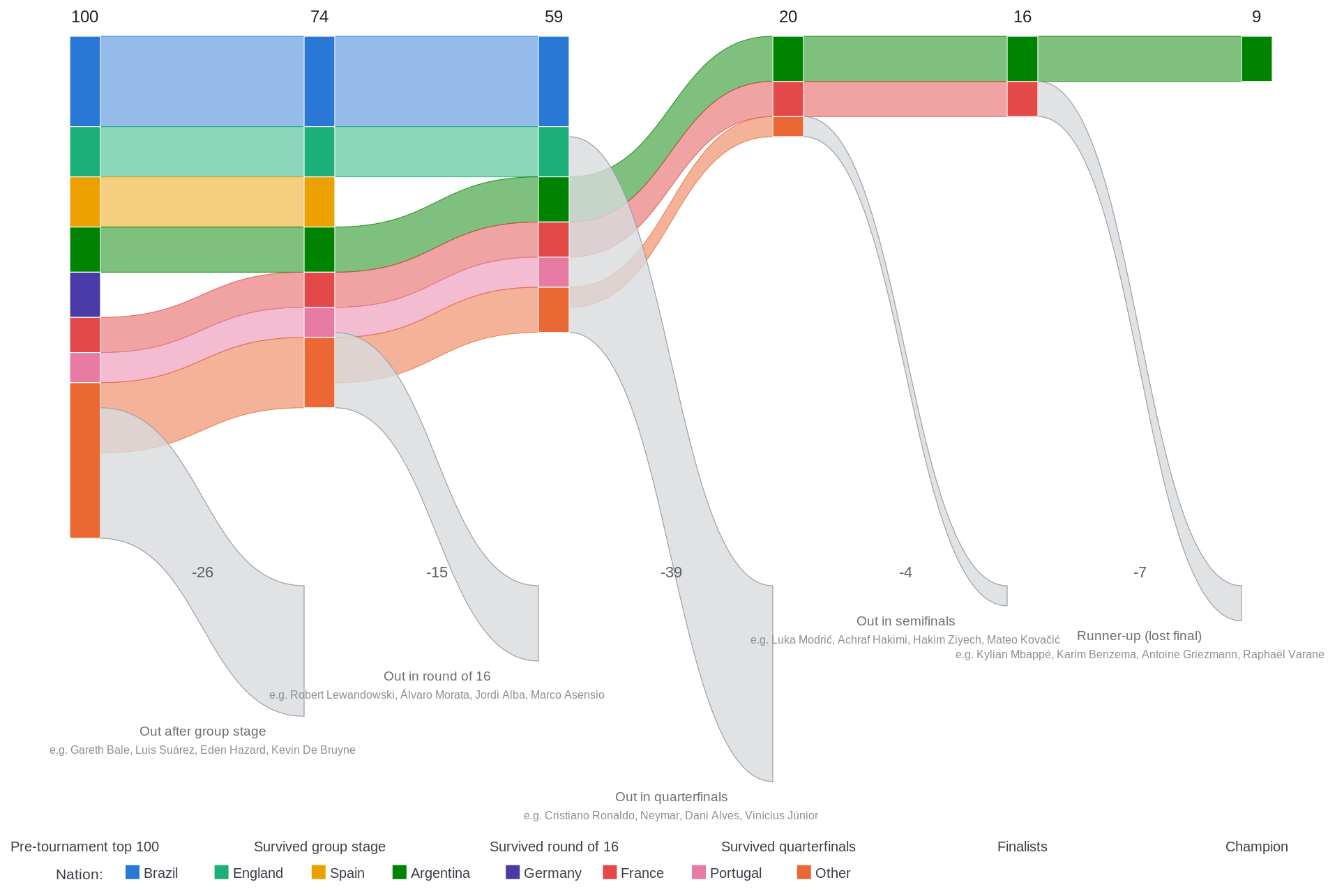
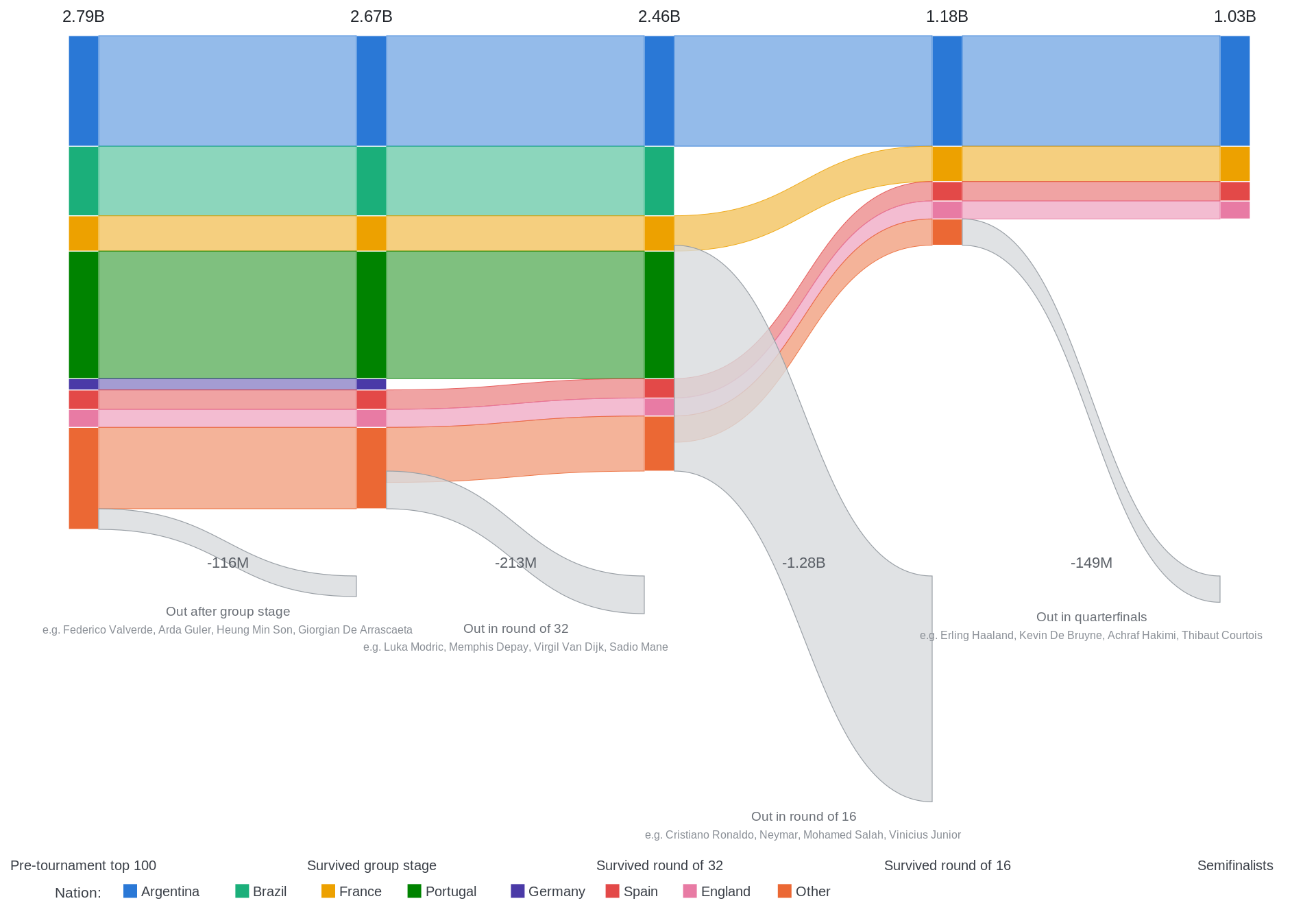
There’s still a lot of eyeballs left. 这两场半决赛确实是球迷的盛宴。
图一是本届世界杯Ins 粉丝数前一百的球星人数留存
图二是2022年Ins 粉丝前一百的球星人数留存
图三是本届按followers计算的留存
本届世界杯比上届更好的留存了星味:
• 四强阶段,本届仍有 33 名顶流球员,显著高于 22 年的 20 名
• 2022 年八强战淘汰了 66% 的顶流,而本届到八强只淘汰掉了 39%,本届强队晋级相对平稳
• 在四强阶段,明星球员的分布更加多元,但梅西仍然让阿根廷占了六成的关注度, 赛事的眼球得到了保留。
最后感谢AI, 可以让我在半个小时内就我感兴趣的话题做一点研究。 这点事放以前至少要一天。
图一是本届世界杯Ins 粉丝数前一百的球星人数留存
图二是2022年Ins 粉丝前一百的球星人数留存
图三是本届按followers计算的留存
本届世界杯比上届更好的留存了星味:
• 四强阶段,本届仍有 33 名顶流球员,显著高于 22 年的 20 名
• 2022 年八强战淘汰了 66% 的顶流,而本届到八强只淘汰掉了 39%,本届强队晋级相对平稳
• 在四强阶段,明星球员的分布更加多元,但梅西仍然让阿根廷占了六成的关注度, 赛事的眼球得到了保留。
最后感谢AI, 可以让我在半个小时内就我感兴趣的话题做一点研究。 这点事放以前至少要一天。
2 00